Blue Cave Dubrovnik vs Other Caves Croatia — Ranked
Croatia has more sea caves than most visitors realise — blue ones, green ones, caves named after Greek heroes, caves you can swim through, caves you need a rowboat to enter. If you are planning a trip from Dubrovnik and searching for the best grotto experience, you have probably noticed that the options involve wildly different logistics and range from a ten-minute boat ride to an all-day expedition.
I have been inside every cave on this list multiple times. What follows is an honest, side-by-side comparison of Croatia’s most popular sea caves — ranked by how realistic they are for someone staying in Dubrovnik who wants to see something extraordinary without losing an entire vacation day to boat transfers.
The Caves We Are Comparing
Here is the lineup. Each one is genuinely worth visiting, but they are not all equal when it comes to accessibility, cost, and the overall experience you walk away with.
- Biševo Blue Cave (Modra Špilja) — the internationally famous one near Vis
- Odysseus Cave — the massive sea cave on Mljet island
- Green Cave — the swim-through cave near Vis
- Betina Cave — the lesser-known blue cave right on the Dubrovnik coastline
Let’s break each one down.
Biševo Blue Cave (Modra Špilja)
Distance from Dubrovnik: Approximately 130 km by sea — a 2 to 2.5 hour speedboat ride each way.
Accessibility: A full-day commitment. Tours depart Dubrovnik around 7:00 AM and return between 5:00 and 7:00 PM. The journey involves open-water crossings that can be rough, and the cave itself requires transferring into a small rowboat because the entrance is barely 1.5 metres high. During peak season, you may queue 30 to 60 minutes outside the cave entrance.
Experience quality: Exceptional. Sunlight enters through an underwater opening and refracts off the white limestone floor, flooding the grotto with an otherworldly electric blue glow. The effect is strongest between 9:00 and 11:00 AM. You spend about 10 to 15 minutes inside, which feels both too short and exactly right. It is a genuine natural wonder that lives up to its reputation.
Cost: Group tours from Dubrovnik typically run €120 to €180 per person, which covers the boat, skipper, and multiple island stops. You also pay a separate cave entrance fee of approximately €12 to €15 per person on site. Private tours are significantly more expensive.
Time needed: 10 to 12 hours door to door.
The catch: You are spending roughly 5 hours on a boat getting there and back. For visitors with limited time in Dubrovnik, that is a steep trade-off — especially when weather cancellations are common and you may not get to reschedule before your flight home.
Odysseus Cave, Mljet
Distance from Dubrovnik: About 50 km by sea, or reachable via a 1.5-hour catamaran ferry to Mljet plus local transport.
Accessibility: More accessible than Biševo, but still a meaningful day trip. The cave sits on Mljet’s southern coast near Babino Polje. If you take the public ferry, you need local transport or a boat taxi to reach the cave — it is not near the main port. Organised boat tours from Dubrovnik include Mljet as part of a multi-stop itinerary. The cave entrance is large and open — no ducking, no rowboats, no queues.
Experience quality: Dramatic and theatrical. Odysseus Cave is enormous — roughly 10 metres high at the entrance with a wide, arching mouth that frames the Adriatic like a movie screen. Inside, there is a small pebble beach where you can sit and swim. The water glows a deep turquoise when the sun angle is right. The scale is what sets this apart — it feels like standing inside a cathedral carved by the sea.
Legend has it that Odysseus himself sheltered here during his voyage home from Troy. Whether or not you buy the mythology, the atmosphere earns the name.
Cost: Mljet day tours from Dubrovnik range from €80 to €140 per person. The Mljet National Park entrance fee (€30 to €40) is sometimes separate. If you take the public ferry independently, budget around €30 to €50 for transport plus park entry.
Time needed: 8 to 10 hours as part of an organised tour, or a full day if travelling independently.
The catch: Most visitors never make it to the cave because Mljet National Park — with its famous saltwater lakes — is the main attraction, and the cave is on the opposite side of the island. You need a boat tour that includes it or a rental vehicle.
Green Cave, Ravnik Island (Near Vis)
Distance from Dubrovnik: About 115 km by sea, usually visited as part of the same day trip that includes the grotto on Biševo.
Accessibility: Almost nobody visits the Green Cave as a standalone destination from Dubrovnik. It is a bonus stop on the longer island-hopping tours, wedged between the main cave visit and a swim at Stiniva Cove. The entrance is large enough to swim through — no rowboat transfer, no entrance fees, no queues. You jump off the boat, swim inside, float around for 15 minutes, and swim back out.
Experience quality: Fun and surprisingly beautiful. The green colour comes from algae on the ceiling reflecting sunlight off the water. You can snorkel inside, and light filtering through the entrance creates shimmering patterns on the walls. Less dramatic than Biševo but more interactive — you are in the water, not observing from a rowboat.
Cost: Included in the full day-tours (€120 to €180 per person from Dubrovnik). No separate entrance fee.
Time needed: About 15 to 20 minutes at the cave itself, but you are committing to the full 10–12 hour Vis-island day trip to get there.
The catch: You cannot easily visit this spot without signing up for the full Vis itinerary from Dubrovnik. It is a great addition to that tour, but it is not a standalone option.
Betina Cave — Dubrovnik’s Own Blue Cave
A note on naming: “Betina Cave” is what we and other local operators call this feature. It sits along the north side of Koločep island in the Elaphiti archipelago (42.6795 N, 17.9950 E) — about 20 minutes by speedboat from Gruž Harbour. If you see it referenced elsewhere as “the Koločep Blue Cave” or “the Blue Cave near Dubrovnik”, that’s the same cave.
Distance from Dubrovnik: About 7 km by sea — roughly 20 minutes by speedboat from Gruž Harbour.
Accessibility: This is the most accessible cave experience available from Dubrovnik, and it is not close. Betina Cave sits on the north side of Koločep island, reachable on a Dubrovnik coastline tour that runs about four hours door to door. Check-in is at Marina Frapa on the Gruž side of the city; the boat heads north-west under the Franjo Tuđman Bridge and past the Grebeni Lighthouse — no long open-water crossings, no transfers to smaller boats. The speedboat pulls right up to the cave entrance, and you swim in.
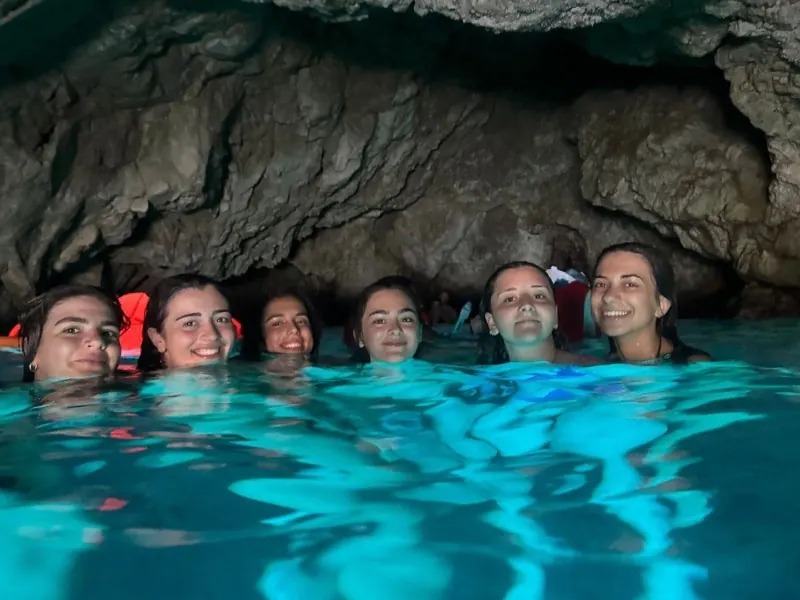
Experience quality: This is where Betina Cave surprises people. The cave produces a vivid blue glow that rivals what you see at Biševo — same physics, same refraction of sunlight through an underwater opening onto a light seabed. The difference is scale: Betina is smaller and more intimate, which some visitors actually prefer. You are swimming in the blue light, not observing it from a rowboat ten metres away.
The cave is also far less crowded. During peak season, you might share it with one or two other boats. At Biševo, you are sharing it with dozens of rowboats cycling groups through every few minutes.
Cost: The scheduled group tour costs €49 per person, with drinks on board, snorkelling gear, and all admissions included; private charters start from €380. No separate entrance fee. Check current pricing and availability here.
Time needed: About 4 hours total, including the boat ride out, a 45-minute cave stop, the Three Green Caves on Koločep’s west shore, free time in the island’s car-free village, a final look into Spilja cave in Zaton bay, and the return to Dubrovnik.
The catch: Betina Cave does not have the international fame of Modra Špilja. If checking a specific bucket-list item matters more than the actual experience, that is worth noting. But if what you want is to see the blue glow, swim in crystal-clear water, and be back in Dubrovnik for a late lunch — Betina Cave delivers all of that in a fraction of the time and cost.
Head-to-Head Comparison
Here is how they stack up side by side:
| Biševo Blue Cave | Odysseus Cave | Green Cave | Betina Cave | |
|---|---|---|---|---|
| Distance from Dubrovnik | ~130 km (2–2.5 hrs) | ~50 km (1.5 hrs) | ~115 km (2 hrs) | ~7 km (20 min) |
| Total time needed | 10–12 hours | 8–10 hours | 10–12 hours* | ~4 hours |
| Cost from Dubrovnik | €120–180 + €12–15 entry | €80–140 + park fee | Included in Vis tour | From €49 |
| Peak season crowds | Heavy | Moderate | Light | Very light |
| Blue glow effect | Yes (iconic) | Turquoise, not blue | Green | Yes (same phenomenon) |
| Can you swim inside? | No (rowboat only) | Yes | Yes | Yes |
| Standalone visit possible | Yes | Requires planning | Not from Dubrovnik | Yes |
| Weather cancellation risk | High (open water) | Moderate | High | Low |
*Green Cave is visited as part of the Vis-island tour, not independently.
So Which Cave Should You Visit?
If you have one full day and want the bucket-list experience: book the full-day Biševo trip. The Biševo Blue Cave is a natural wonder, the Green Cave near Ravnik is a fun bonus, and the day includes stops at Stiniva Cove and other Vis island highlights. Just go in knowing it is a long day on the water — and a very different outing from our own half-day tour.
If you are visiting Mljet anyway: Make sure your itinerary includes Odysseus Cave. It is an extraordinary site that most Mljet visitors miss because it requires a detour from the national park.
If you have limited time in Dubrovnik — or want the blue-glow experience without the all-day commitment: Betina Cave on the Dubrovnik coastline tour is the clear winner. Same physics, a fraction of the travel time, significantly lower cost, and you are swimming in the light rather than watching it from a rowboat. You will be back at your hotel in time for a late lunch.
If you have multiple days: Do both. See Betina Cave on your first or last day when time is tight, and book the full Biševo tour for a day when you can afford to be on the water from sunrise to sunset. They are different experiences, and both are worth it.
The Honest Truth About Blue Caves
Every cave on this list is beautiful. But the logistics matter — especially when you are working with limited vacation days and trying to balance cave tours with the walls, the old town, restaurants, and everything else Dubrovnik offers.
The Biševo Blue Cave earned its fame for a reason, and if seeing it is a lifelong dream, go. But if what you actually want is to float in impossibly blue water inside a sea cave, Betina Cave gives you that in four hours instead of twelve, at a third of the price, with almost no chance of weather cancellation. That is not a consolation prize — that is a smarter way to plan your trip.
Ready to see it for yourself? Browse our Dubrovnik coastline tours and find the right fit for your schedule. For a deeper dive into the history, geology, and logistics, read our complete Blue Cave Dubrovnik guide.
Frequently Asked Questions
Is the Blue Cave closer to Dubrovnik or Split?
There are two: the Blue Cave on Koločep island is 20 minutes from Dubrovnik, while the more famous Biševo Blue Cave (Modra špilja) near Vis is about 5 hours from Dubrovnik. Staying in Dubrovnik? Koločep’s cave is the practical choice — Blue Cave Tours Dubrovnik departs Gruž Harbour daily, April–October, from €49 (reduced from €60 on 2026-08-02).
What is the best Blue Cave in Croatia?
Croatia has two celebrated blue caves: the Biševo Blue Cave near Vis and the Blue Cave on Koločep island near Dubrovnik — the “best” one is whichever is near your base. From Dubrovnik, Koločep wins on access: a 20-minute speedboat ride and €49 tours (reduced from €60 on 2026-08-02), versus roughly 5 hours each way to Biševo.
What is the difference between the Blue Cave near Dubrovnik (Koločep) and the Biševo Blue Cave near Vis?
They are different caves: the Blue Cave near Dubrovnik sits on Koločep island in the Elaphiti archipelago, while Biševo’s “Modra špilja” lies near Vis, about 5 hours from Dubrovnik. Koločep’s cave is 20 minutes from Gruž Harbour, 3–5 m deep, and you can swim inside it — Blue Cave Tours Dubrovnik visits daily, April–October, from €49 (reduced from €60 on 2026-08-02).
Related Reading
If this comparison helped, these guides go deeper on specific parts of the Dubrovnik cave-tour decision:
- Best time to visit Blue Cave Dubrovnik — month-by-month conditions, light quality, and crowd levels straight from our 2025 logbook.
- Blue Cave Dubrovnik itinerary — a full Dubrovnik day plan built around the morning departure.
- How to book a Blue Cave tour — step-by-step booking, what to look for in an operator, and how to avoid OTA fees.
- Private vs group Blue Cave tour — honest editorial on which format fits which kind of traveller.
- Hidden spots near Blue Cave Dubrovnik — seven local-only beaches, coves, and sea caves, including Spilja in Zaton bay.
- Islands near Dubrovnik by boat — Koločep, Lopud, Šipan, Lokrum ranked by travel time.
- Dubrovnik boat tour mistakes to avoid — ten common pitfalls, from time slots to motion sickness.